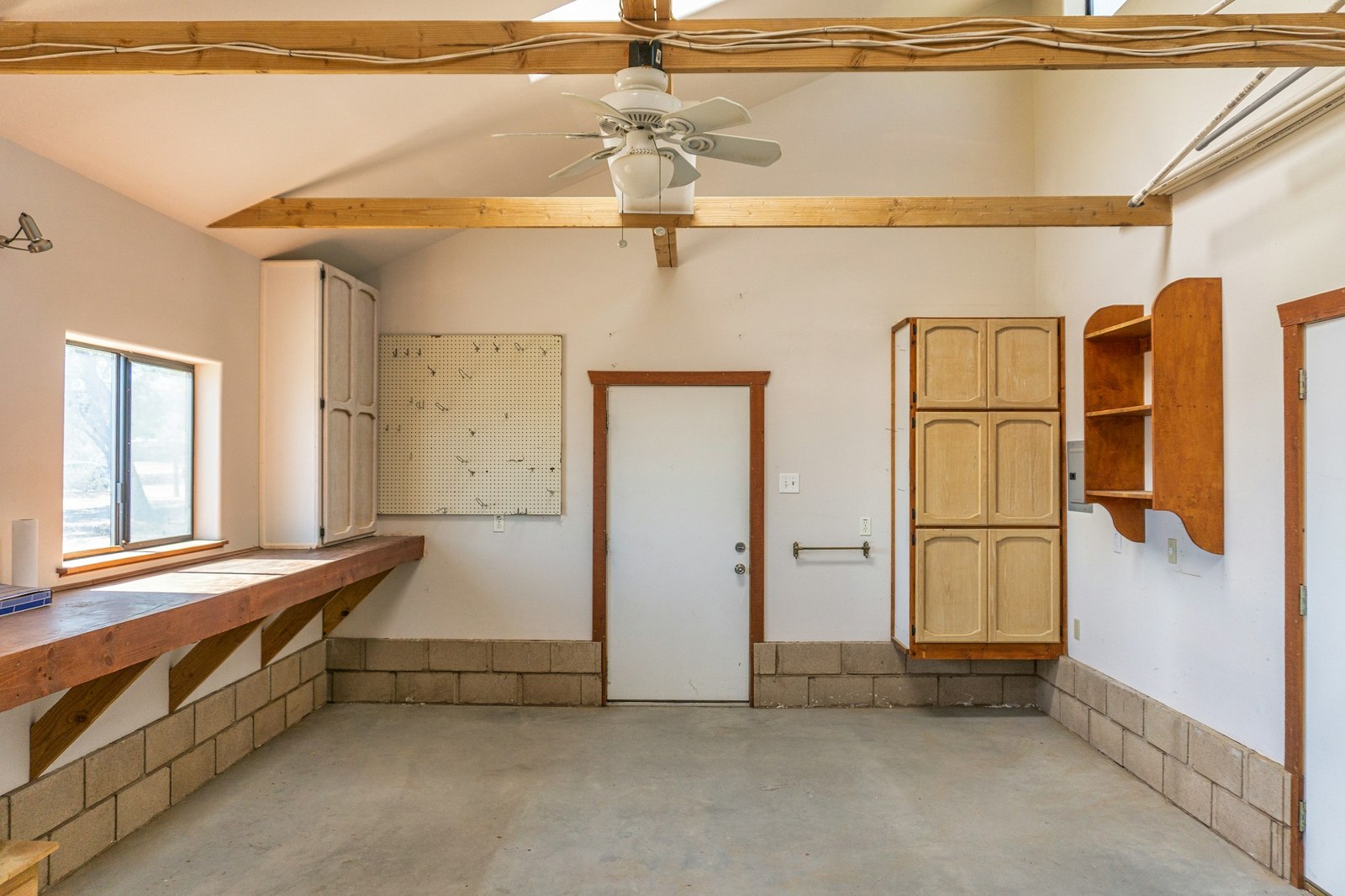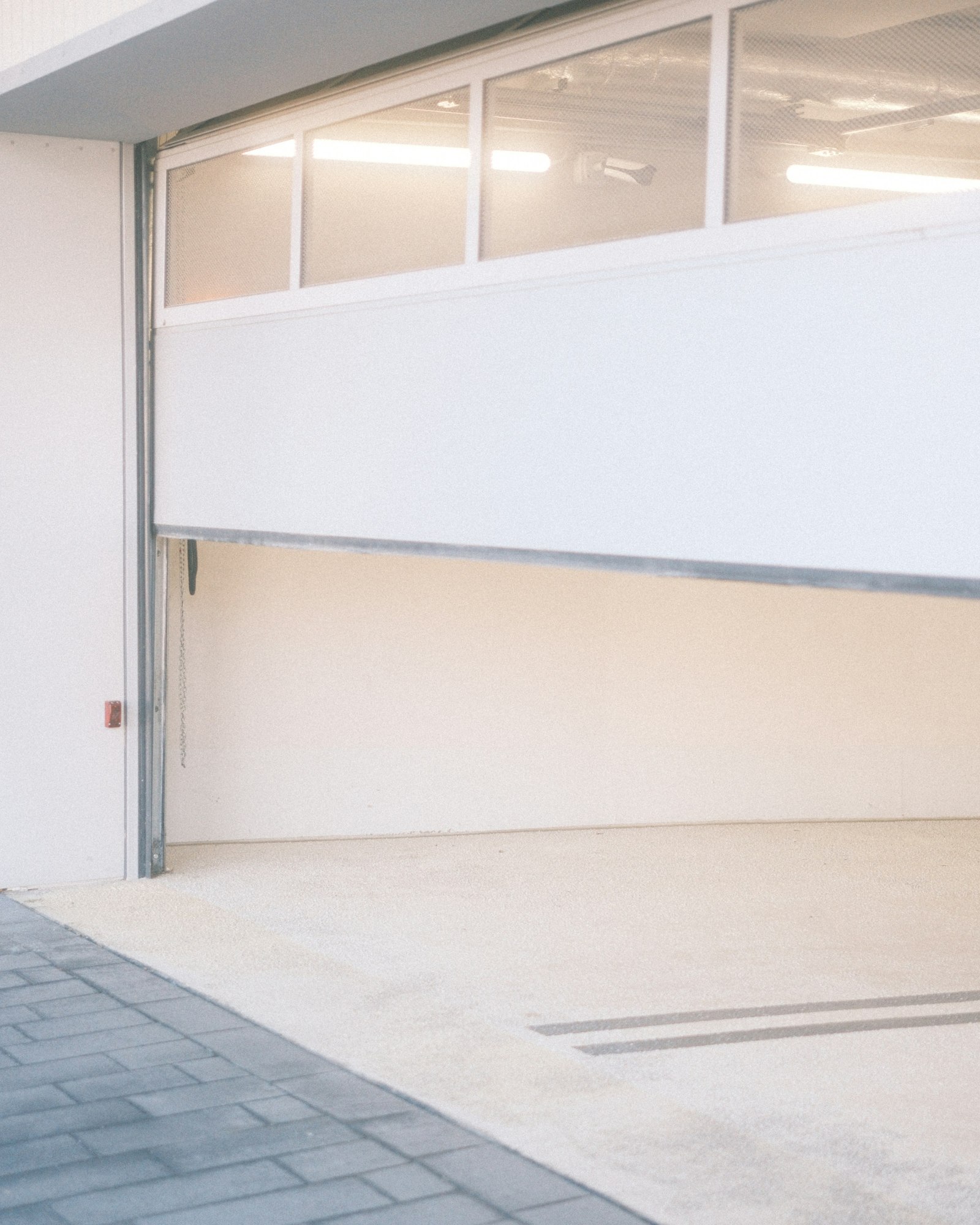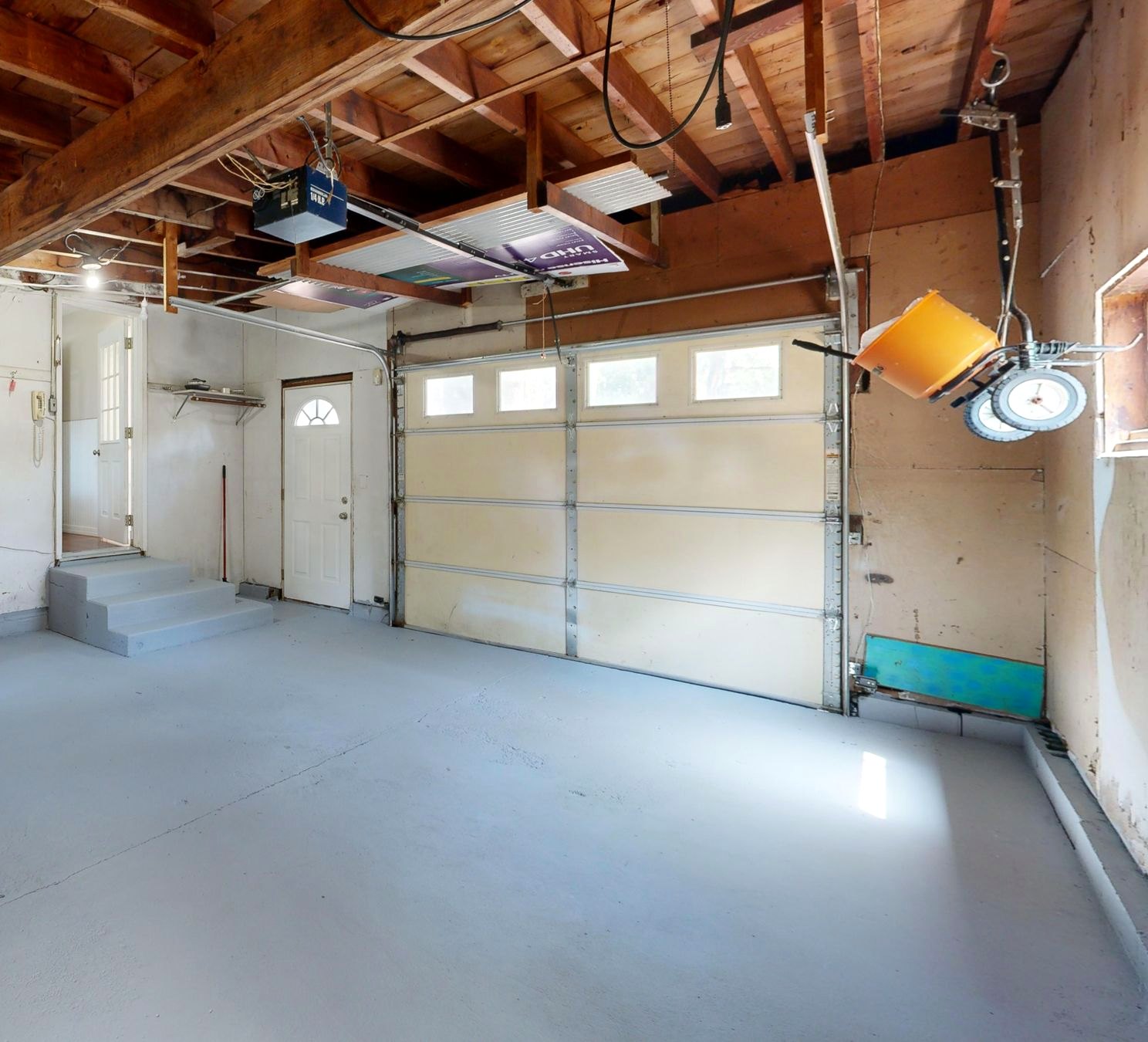
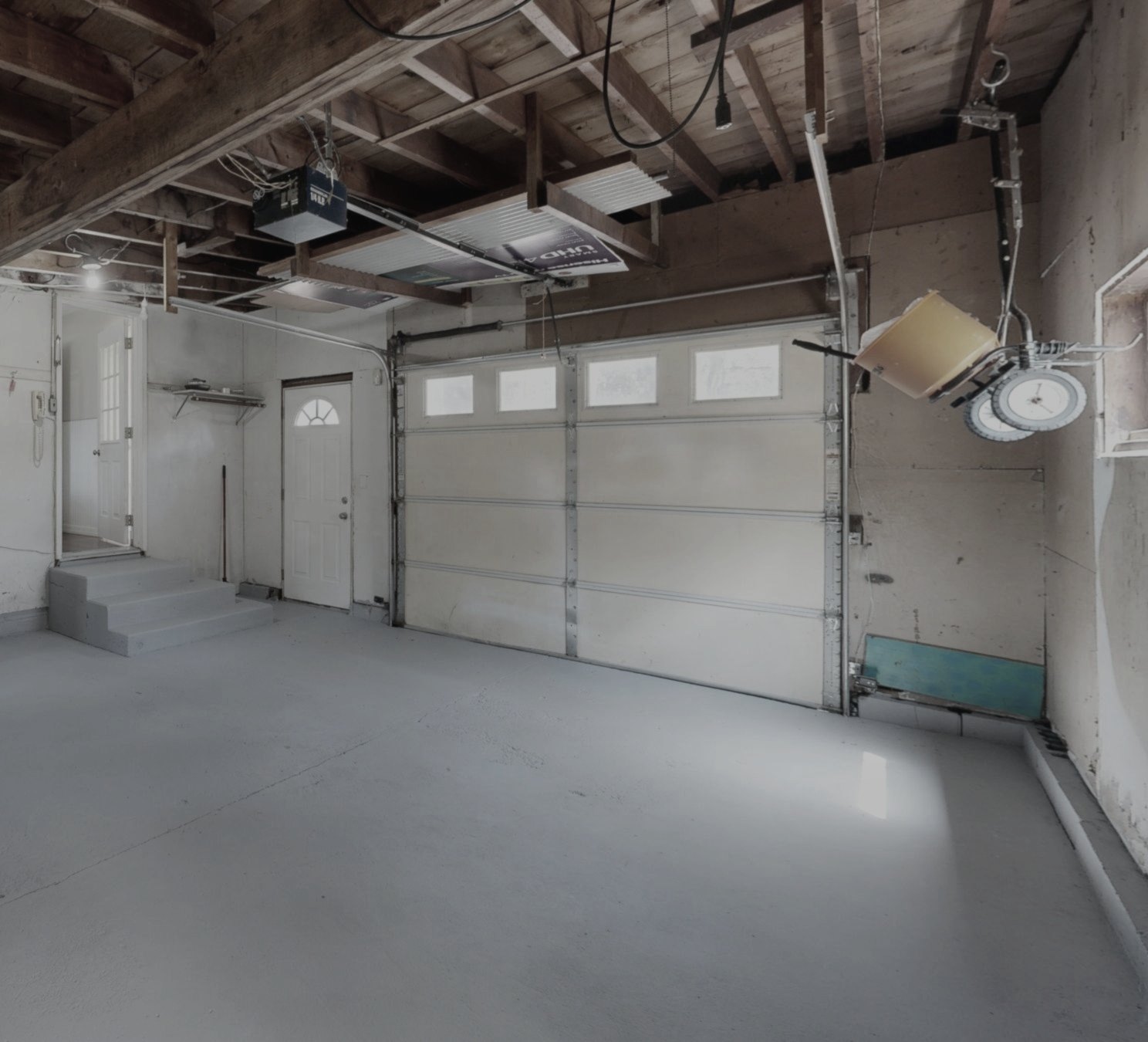
Two-car garage, full-flake system
The slab had two long cracks and dark stains where the tires sit. We ground the floor, filled the cracks, and ran a full-flake system with a polyaspartic topcoat.
Flake spread until the wet coat can hold no more — the granite look, the grip, and the cover for a slab's small sins, all in one finish.
Tell us about the floor. We call back with a time to come look — the written price comes after the in-person look, before any work starts.
Rather talk? Call (352) 555-0148.
A flake floor is an epoxy base coat with vinyl flake spread into it while it is wet, then sealed under a clear top. The word that matters is full: a full broadcast means flake goes down until the coat can hold no more, wall to wall. A light sprinkle is a cheaper, thinner floor wearing the same name.
Full flake earns its keep three ways. It hides the patches, pores, and small cracks every slab has. It builds texture, so the floor has grip. And it reads like cut stone, which is why most Ocala garages that come to us land here. Pick your blend from real samples at the estimate — grays first, then charcoals and warm browns.
The build under the flake is the same as every floor we run: diamond grind, repairs ground flush, moisture test, then base, flake, scrape, vacuum, and a sun-stable polyaspartic top.
Flake is not just a garage finish. It is a strong pick for lanais and workshops too, anywhere you want texture and a floor that does not show every speck of dirt between cleanings.
Blends are mixes of three to five flake colors. Light grays keep a garage bright and hide dust. Charcoal blends read sharp and hide tire marks. Warm browns sit well with Ocala's farm and wood tones. Flake size matters too: bigger chips read bolder, fine chips read smoother.
You pick at the estimate, from samples on your own slab, in your own light. A blend on a screen is a guess; a blend on your floor is a decision. We bring the boards and leave them with you while you think.
The slab had two long cracks and dark stains where the tires sit. We ground the floor, filled the cracks, and ran a full-flake system with a polyaspartic topcoat.
A thin paint coat from years back was lifting at the door line. We ground it all off and tested the slab for moisture. Then we laid a polyaspartic system that holds its color in the sun.
A brand-new slab, coated before the first oil drip ever hit it. We ground off the curing seal, checked the moisture, and ran a full-flake floor while the house was still empty.
Tell us about the floor. We call back with a time to come look — the written price comes after the in-person look, before any work starts.
Rather talk? Call (352) 555-0148.
At our rates, a two-car garage in full flake runs $2,640 to $4,180. Size, slab shape, and add-ons like crack repair move the final number. You get it in writing after the in-person look.
No — the flake itself gives the floor texture, and we add grip to the topcoat where a floor gets wet. It is one of the best finishes for entries and lanais.
A blend already mixes several colors of flake. If you want a border or a two-tone floor, say so at the estimate and we will price it into the job.
The flake sits in a full-build base under a hard, sun-stable top. That build is what resists hot-tire pickup — not the flake alone, but the system as a whole.
It hides hairlines and patches well. Wide or moving cracks get filled and ground flush first, and we will be straight with you: a crack that keeps moving can show through any coat in time.
Pick your floor and its size. The range updates as you go.
Add-ons your floor may need
Every floor is different. Slab condition moves the final number more than size does.
These are planning ranges, not a quote — your final price is confirmed after an in-person look, before any work starts.