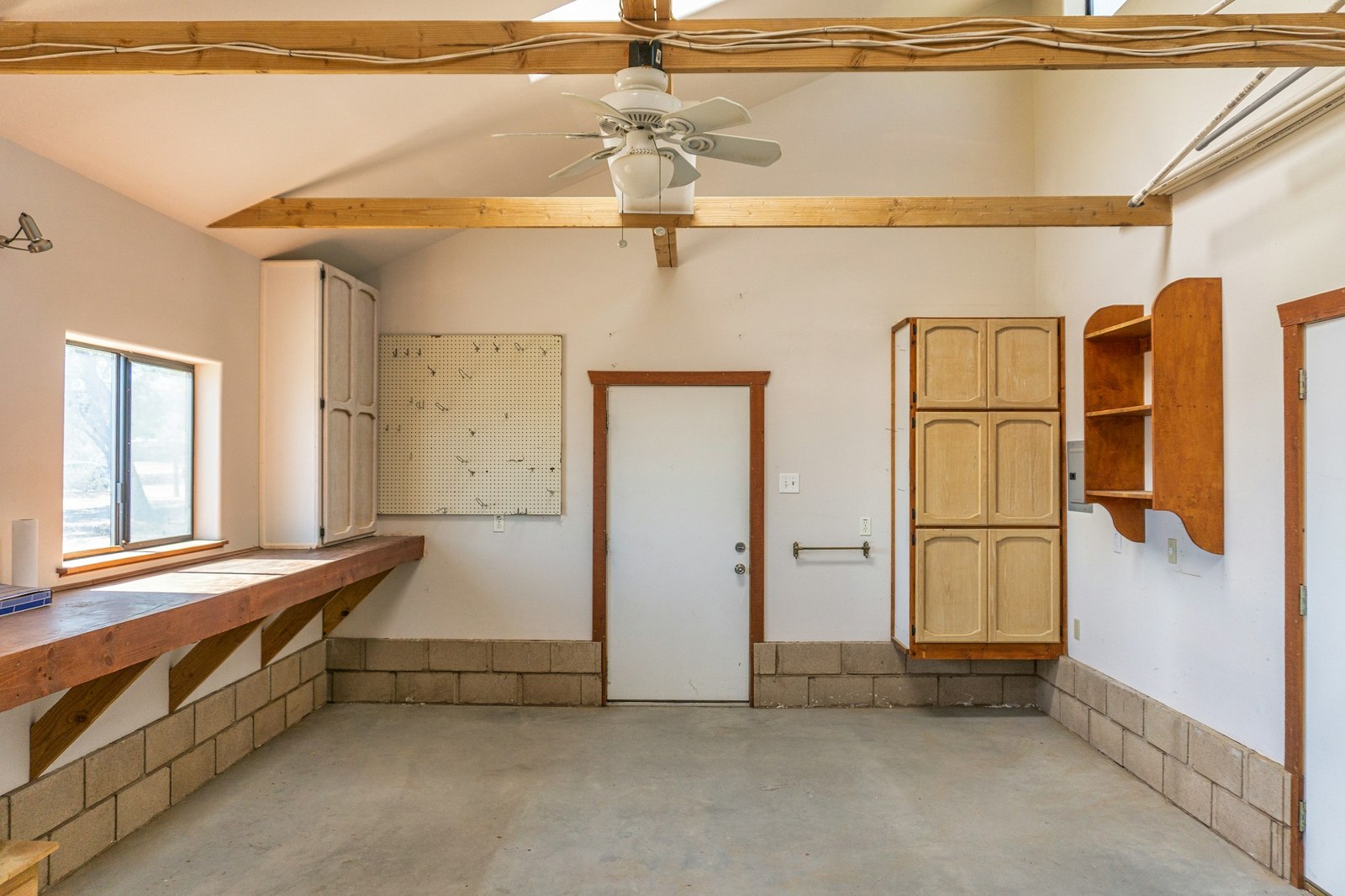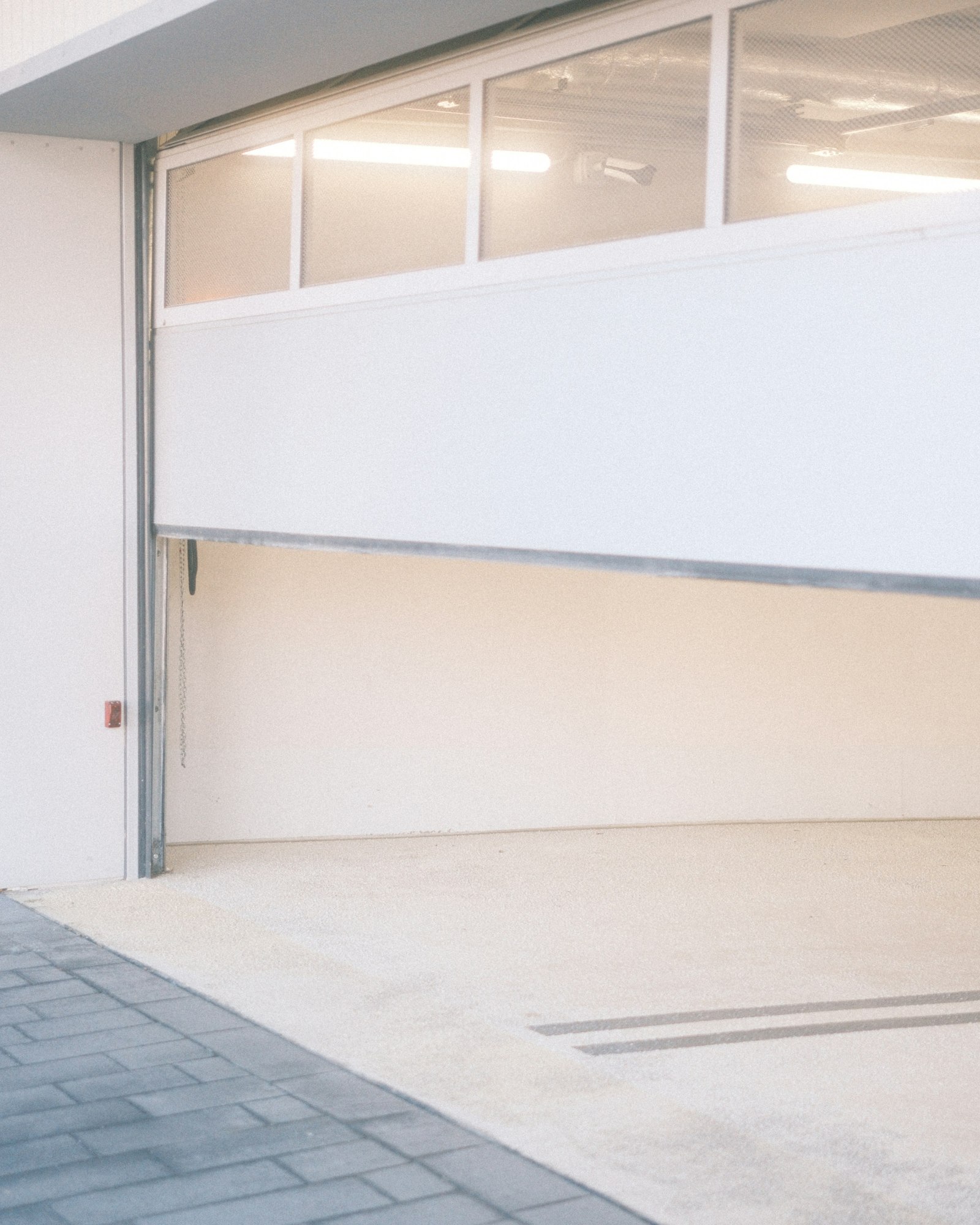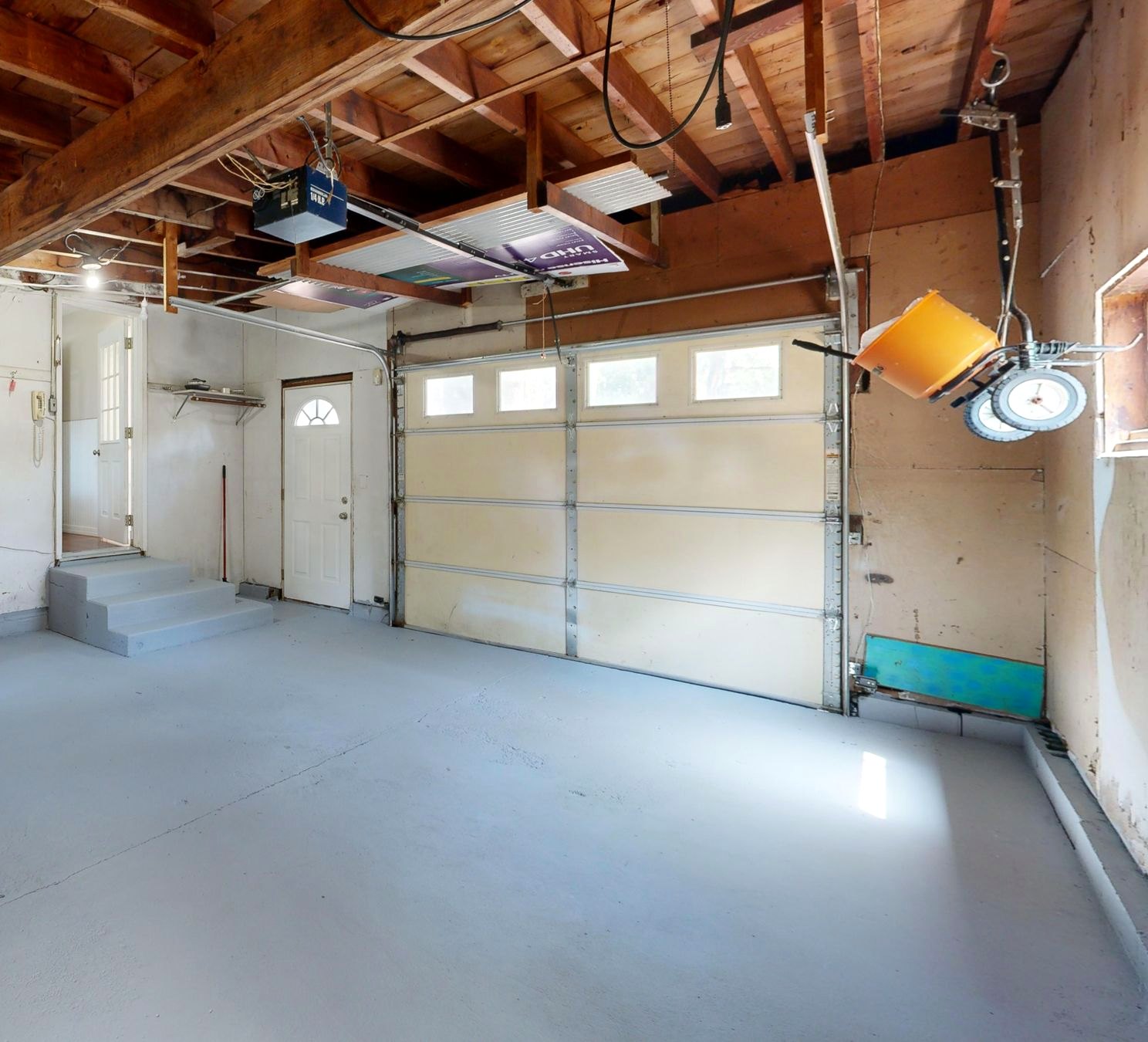
Two-car garage, full-flake system
The slab had two long cracks and dark stains where the tires sit. We ground the floor, filled the cracks, and ran a full-flake system with a polyaspartic topcoat.
The fast-cure family: cures in hours, holds color in full sun, and bends with the slab through hot days and cool nights.
Tell us about the floor. We call back with a time to come look — the written price comes after the in-person look, before any work starts.
Rather talk? Call (352) 555-0148.
Polyaspartic is a fast-cure coating in the polyurea family. It goes on as a topcoat over an epoxy base on most of our floors, and it can also run as a full system. It cures in hours, not days, and it does not amber in the sun the way plain epoxy does.
That sun point is the big one in Florida. A garage door line, a lanai, a carport edge — anywhere light lands every day, a polyaspartic top holds the color the floor had on day one. It also stays a bit flexible, which helps it ride the slab through heat swings without cracking.
Polyurea and polyaspartic are close kin, and on most jobs they work as one system: a polyurea-style base for speed and flex, a polyaspartic top for sun and wear. When folks ask for one or the other by name, this is usually the build they mean. We will spec your floor at the visit and tell you plain which coats go where.
Fast cure is a real help, not a slogan: less time with the garage empty, less dust risk between coats, and a floor that gets back to work sooner. What it is not is a shortcut around prep — the grind and the moisture test still come first.
Sun-hit floors are the clear case: lanais, pool decks, carports, and the front half of every garage. Busy shops are the second case — a floor that can take foot traffic the same evening loses less work time. Garages that need the car back fast are the third.
On a shaded, standard garage, our hybrid build — epoxy base, flake, polyaspartic top — already gets you the sun-stable top where it counts. A full polyaspartic system prices higher, and we will tell you when it is worth it and when it is not.
The slab had two long cracks and dark stains where the tires sit. We ground the floor, filled the cracks, and ran a full-flake system with a polyaspartic topcoat.
A thin paint coat from years back was lifting at the door line. We ground it all off and tested the slab for moisture. Then we laid a polyaspartic system that holds its color in the sun.
A brand-new slab, coated before the first oil drip ever hit it. We ground off the curing seal, checked the moisture, and ran a full-flake floor while the house was still empty.
Tell us about the floor. We call back with a time to come look — the written price comes after the in-person look, before any work starts.
Rather talk? Call (352) 555-0148.
Polyaspartic tops cure in hours. Many garages are back in service the next day, cars included. Your exact times are set by your slab and system, and they come in writing at the estimate.
Better at some things: sun, speed, and flex. Epoxy builds thicker and bonds deep, which is why most of our floors use both. The right pick depends on your floor, and we will walk you through it at the look.
There is a coating smell while the work goes on and while it cures. We vent the space, and the smell clears once the floor cures. Kids and pets stay off until we give the all-clear.
At our rates, a two-car garage in a polyaspartic system runs $3,300 to $4,840. It prices above the flake hybrid because the material costs more. The calculator below runs your size.
Not over a failing coat — nothing should. We grind the old coat off, repair the slab, and build the new system on clean concrete.
Pick your floor and its size. The range updates as you go.
Add-ons your floor may need
Every floor is different. Slab condition moves the final number more than size does.
These are planning ranges, not a quote — your final price is confirmed after an in-person look, before any work starts.